
Piano Lessons = Underrated
Although many parental figures seek to expose their children to multiple different activities and experiences while they are young, traditional piano lessons truly teach students skills that may not be acquired through other activities. This is not going to be yet another one of those opinion editorials that are constantly reinforcing the need of getting children involved in the arts and how it makes them smarter; more so on the investment, the parents are making for their children and how worthwhile the investment is even though it is not taken seriously enough.
According to LindeBlad: Piano Restoration, piano lessons seek multiple cognitive benefits. These benefits include teaching students how to multi-task by having the player think about and incorporate multiple musical features at once, discipline by following the rules of music constantly, and organization by balancing the rules of music and musical features in which one needs to be prioritized at different parts of a piece. Let alone learning the language of the world of music theory, the structure of music and how music came to be. Along with cognitive benefits, comes with physical benefits, such as improving tactile learning through hands-on learning. However, there are downsides to the activity, such as the financial investment, or the minor wrist pains when playing too much, or the frustration that accompanies a difficult piece. Even though there are downsides present, they are temporary and situational, that is also outweighed by the benefits of the long-term possibilities piano lessons provide.

As a piano teacher of five years, I’ve seen my fair share of students who grew with piano, those who have stopped piano and those who are deciding still or are on and off with the activity overall. Regardless of the reason why some students discontinue piano, not one student have I encountered that did not learn anything beyond the music itself. As it is a process of how to learn music, piano. A student is first introduced to the music on the page; what notes are, and the logistics of music. Which is then followed by the actual hands-on application of the notes on the page. Those notes are then played many ways by the player which then incorporates the artistic touch and ability of the student; showing them their own style. Depending on the history of the piece, some styles of playing are more acceptable than others, which then branches off into music history. It is a constant domino effect of learning.
Piano lessons cultivate the minds of children, which allows them to be creative all while learning many basic principles that can be applied to their own life at many different stages. With a hefty investment, comes a life-long experience. Many start piano lessons young, yet there is no defined age as to when an individual can and cannot start and is an activity they can carry and play until they die.
Even though piano lessons may not be a match for everyone, it is worth the attempt in a fifty-fifty chance of being a lifelong investment and hobby.
https://www.lindebladpiano.com/ca/blog/benefits-of-playing-piano
— Written by Linz Rynders
AP Exam Study Tips

- Think Ahead; Don’t let day to day operations drive out planning: This is the most strongly recommended tip! Often times, students find themselves procrastinating in the first half of the year. By January, they start cramming, and often do not have time to, since it also clashes with school exams and other activities. It is very important to set certain goals and targets for each month, and remind yourself that all the days you put off, will add up and come back at you in the end. Measuring monthly/ weekly progress will help you stay on track, while getting balancing work done efficiently, as well as leaving you time to focus on extracurriculars, and leisure activities.
- Read the textbook, if you are under confident/ completely new to the subject: Some students tend to be overconfident and jump straight into the review book, for a subject that they have not been exposed to before. A review book is a shorter, condensed version of the complete textbook, usually meant for last month studying. It is necessary to read and absorb the concepts in detail from the textbook, to not only hurriedly memorize, but also to understand in depth. This is especially relevant for someone planning to self study.
- Don’t be afraid to ask: There are plenty of resources that an AP student can utilize, if they cannot fully comprehend or are having difficulties with a particular topic. Questions on the AP exams do not come straight from the text, a majority of them are application and thinking based questions. Therefore it is important for one to get a grasp of the concepts being taught. With my personal experience, online AP groups, podcasts, and youtube videos were extremely useful and they helped constantly, throughout the year. Take help of your teachers in school, asking them questions or make an appointment to go over something with them.

- Balance work: It is important to study for your AP exams, however it is more necessary to make sure to focus on your school life and academics. Learn to balance your work between academics and AP studies. AP exams are enrichment, however are not at priority. Focussing on school subjects is crucial, an is what matters the most, out of all extracurriculars. Dedicate some time to studying for AP when you have relatively light days. Otherwise, prioritize a test or assignment that you have coming up.
- Don’t overload; At the beginning of the year, many students tend to make the mistake of taking on to too many AP exams, thinking that they would be able to self study easily. This is rarely the case, especially with studying by oneself, since as I mentioned before, it can be quite hard to juggle so many parts in your life at the same time. There’s no problem to do so, if you are familiar with the subjects and confident that it will be easy for you. Students have suggested talking to seniors first, and comprehending the difficulty of the subject to judge if you could handle it.
- Study in groups: Find out who else is taking the same exams as you are, and contact them to collaborate and study together, for some comparatively hard to understand chapters. Plan study sessions with classmates to talk about the full content, test one another, and outline ideas and responses for practice essay questions. Start with a weekly study group, and as the AP exams come near, meet more frequently during a week to review notes and give mutual support.
- Do it NOW: Do not procrastinate! This is a terrible vicious circle, and very hard to break out of. Do not delay work until later or the next day, or month, or year. Finish reading whenever you have spare time and stick to your schedule. I’m not telling you to do more than what you planned if you have extra time, you could if you want of course, but relaxation and leisure time is necessary too! Plan out the number of AP’s you would take each year in your full high school career, and don’t forget to also take into consideration the school courses workload.
- Take Notes: This does not apply to everyone, since each individual has a differential way of learning and absorbing. However, his is a highly recommended tip from AP exam takers. It will help you use your study time efficiently, by allowing you to look back at your notes and revise. Writing important concepts will also help register the material better in your brain, and counts for better memory. You could even make something more fun, like flashcards or mind maps! The important thing is that you are making a record of the significant information as you learn it, to help you retain it and to help you review.
- Practice, Practice, PRACTICE!: I cannot stress the importance of this enough. Start practicing with mock exams, online or in the review book/ textbooks, around halfway towards your designated study time. You will learn more from taking tests, than you will if you keep revising blindly. Practicing with past year exams helps you pinpoint your strengths and weaknesses, i.e. what you need to focus on for the rest of the time uptil the exam.

- Relax and don’t stress out!: It won’t be the end of the world if you get lower than a 5! AP exams can always be retaken and life goes on. It is just an enrichment, ‘extra’ course that is taken, so do not be too upset or stressed about it. Of course, take them seriously and try your absolute best, but if that doesn’t work, it’s completely okay! Learn from your mistakes and modify your methods the next time round.
I hope you try out some of them of these tips and they help you with your studying experience. Good luck this AP test season!
~Nikita Chugh
Summer Camp Volunteering Opportunity
How’d you find out about it?
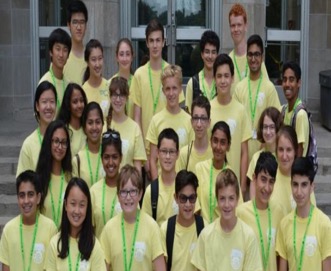
I found out about the program through friends at school who had been part of the Venture Camp for students in grades 1-8. They told me all about the exciting projects that they worked on and the fun they in the laboratory working with high school students (Junior counsellors) at the camp. I was curious about the position considering that I have a passion for science and hope to attend the university after high school. I looked into the position on the McMaster website where I found the application for the Junior Counsellor position. Although it was quite demanding, with requirements like reference letters, essays, and a copy of my report card, I took a chance and fortunately got accepted.
What was it like?
During my month at the camp, I gained many friendships and learned things that made for an unforgettable and enriched experience. One great thing I developed from being a Junior Counsellor is strong leadership skills. Having to work with younger kids meant having to overcome challenges and be patient, which is extremely helpful in any circumstance. I also learned a lot more about science through the Counsellors and had fun working in the laboratory with the students. There was never a dull moment and the activities were always fun and engaging for everyone. By the end of what seemed like a short month, I had already gotten 180 volunteer hours. It was a lot more than needed, but it’s important to keep in mind that volunteer hours can be used to apply for scholarships.
Why should I apply?
This is an excellent opportunity for all high school students who live close to the Hamilton region and I would highly encourage anyone to apply. Not only will you be able to complete your volunteer hours, you’ll also make long lasting memories. If you don’t get accepted into the position, I encourage you to find ways to become involved in things you're passionate about. The outcome will surely be rewarding.
Thanks for reading,
- Written by Ariana Walji